
Home / Services
Testing, mitigation, ERVs, and the parts in between.
Seven services, one person doing all of them. Every job ends with a number in writing.
Radon testing
For homeowners who want to know, and for buyers, sellers and agents who need documentation before a closing date.
We test with a continuous radon monitor, not a charcoal kit from the hardware store. The monitor sits in the lowest level of the home that people use and records the radon level every hour, usually for 48 hours under closed-house conditions. Hour-by-hour data shows whether the reading was steady or whether someone opened the basement door on day two, which a mail-in kit cannot tell you.
You get a written report with the average, the hourly readings, and a plain recommendation. If your home is fine, the report says so and we're done.
Real estate transactions
Radon tends to show up late in a deal. We schedule placement quickly, pick the monitor up on time, and deliver a report that the buyer's lender and attorney will accept. If mitigation is needed, you get a quote fast enough to negotiate with before the deadline.
Radon mitigation
We guarantee below 3.0 pCi/L, and we aim for under 2.0. The EPA action level is 4.0. We don't stop there.
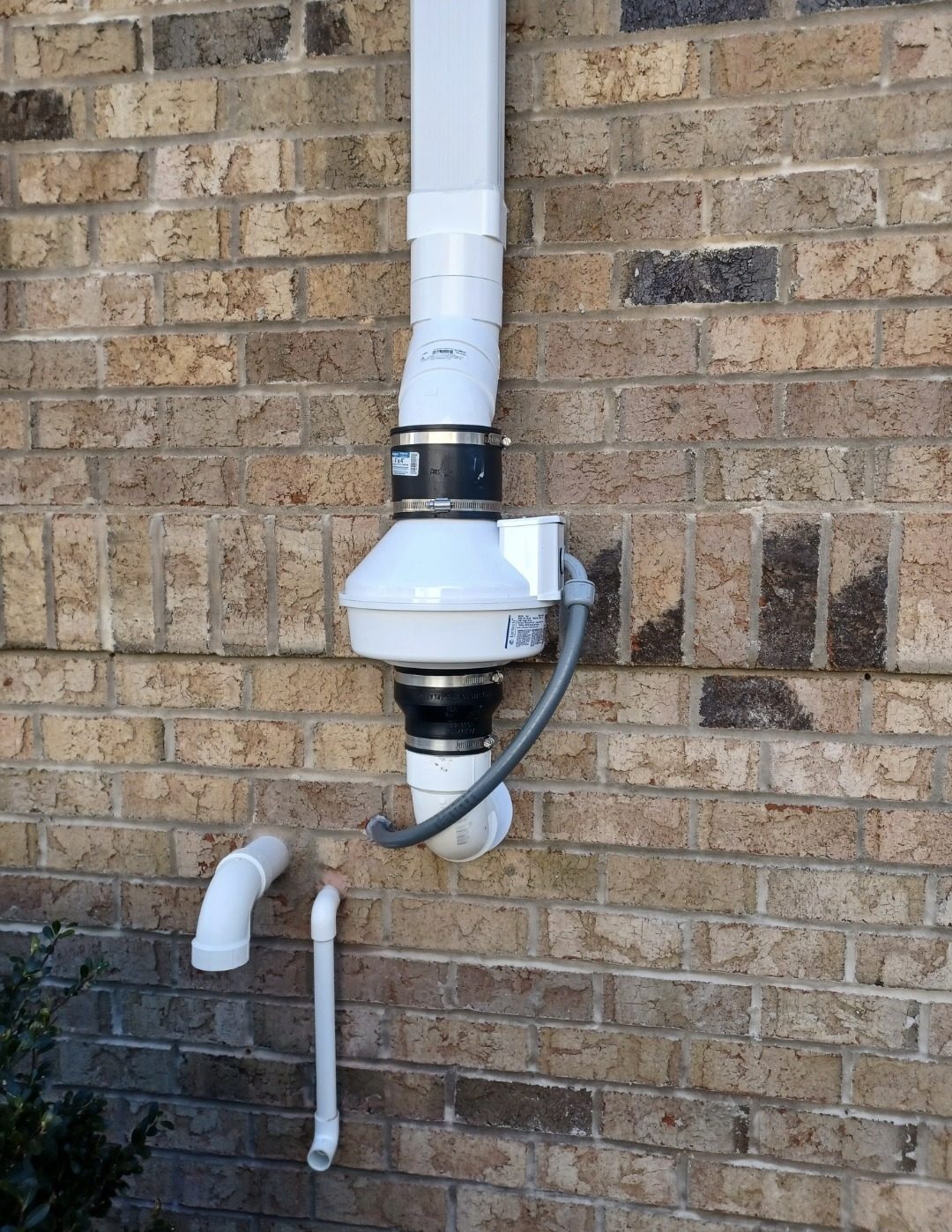
The right system depends on the foundation. Slab and basement homes usually get sub-slab depressurization: a suction point cored through the slab, the visible entry routes sealed, and a fan that pulls soil gas out from under the house through sealed pipe and releases it above the roofline. Crawlspace homes get a sealed membrane over the soil with the suction point under it. Some homes need more than one point or a combination of methods.
Russell has spent more than 20 years in soil vapor extraction, which is the engineering behind all of this, and he designs each system for the house in front of him. Every system includes a manometer so you can see at a glance that the fan is pulling. Most installations are finished in a day.
The guarantee
After the system has run, we re-test. If the post-mitigation test is not below 3.0 pCi/L, we come back and keep working at no charge until it is. We aim for under 2.0 wherever the house allows it.
Vapor intrusion and VOC mitigation
For buildings over contaminated soil or groundwater, where the gas coming up from below is more than radon.
Vapor intrusion is what happens when vapors from contaminated soil or groundwater move up into the building above. The usual culprits are volatile organic compounds (VOCs), from things like fuels, solvents and degreasers. They follow the same paths radon does: cracks in the slab, gaps around pipes, sump pits and open crawl spaces.
This is the work Russell's background is built on. He has more than 20 years of hands-on work in soil vapor extraction, the discipline used to pull contaminated vapor out of the ground on commercial and industrial sites. Mitigating vapor intrusion works on the same principle as a radon system: draw the soil gas out from under the building and vent it outside before it can come in.
Soil gases besides radon
If you've been told there's contamination near your property, or a test has turned up something other than radon, call Russell and talk it through. He looks at the building and the situation before he recommends anything.
ERV installation
Energy recovery ventilators for homes that are sealed too tight to breathe on their own.
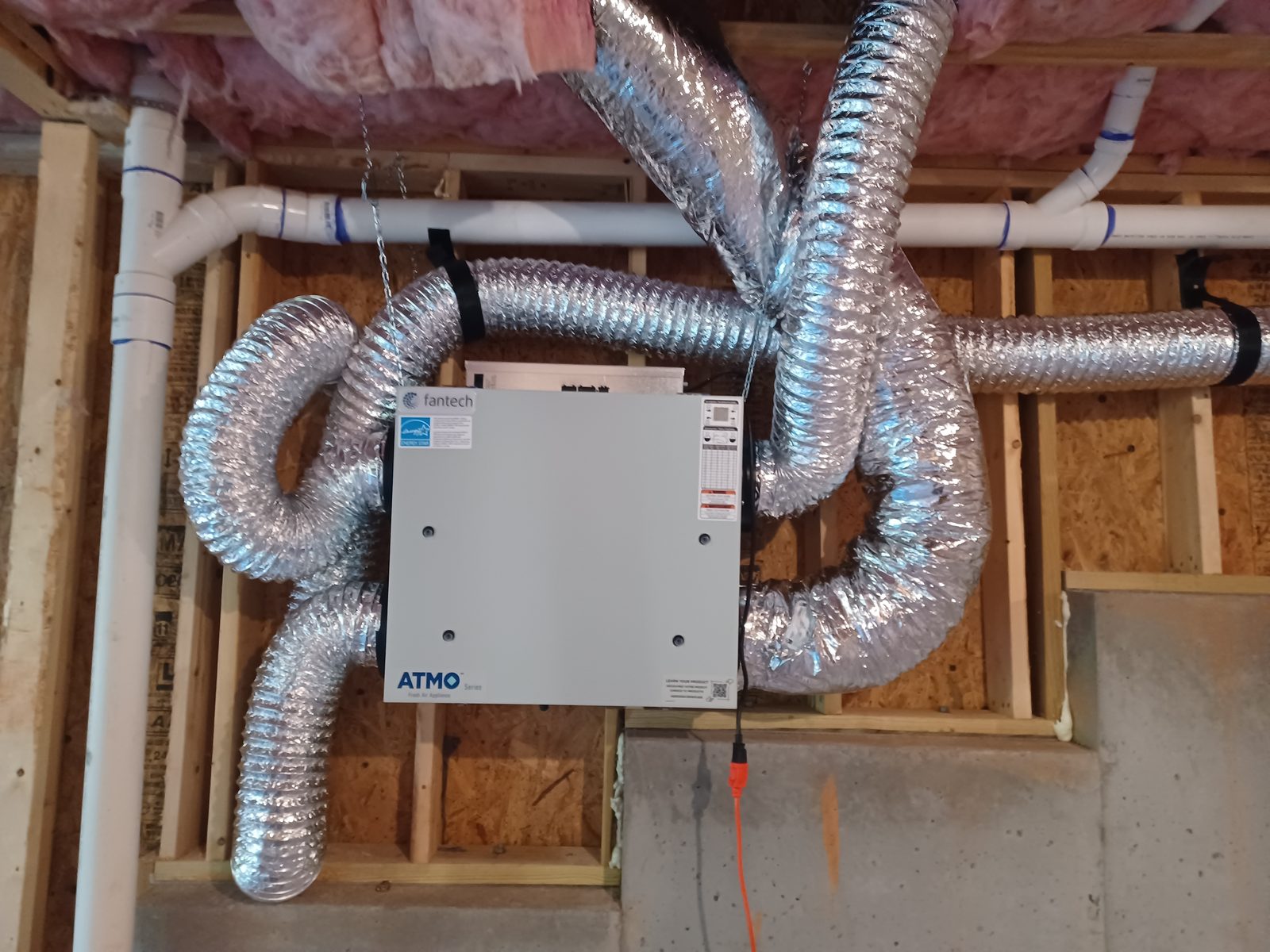
Newer and well-insulated homes hold in heat and cooling very well, which also means they hold in everything else: humidity, cooking smoke, off-gassing from finishes, and soil gases that make it inside. Opening a window fixes the air and wastes the energy. An energy recovery ventilator does the first part without the second.
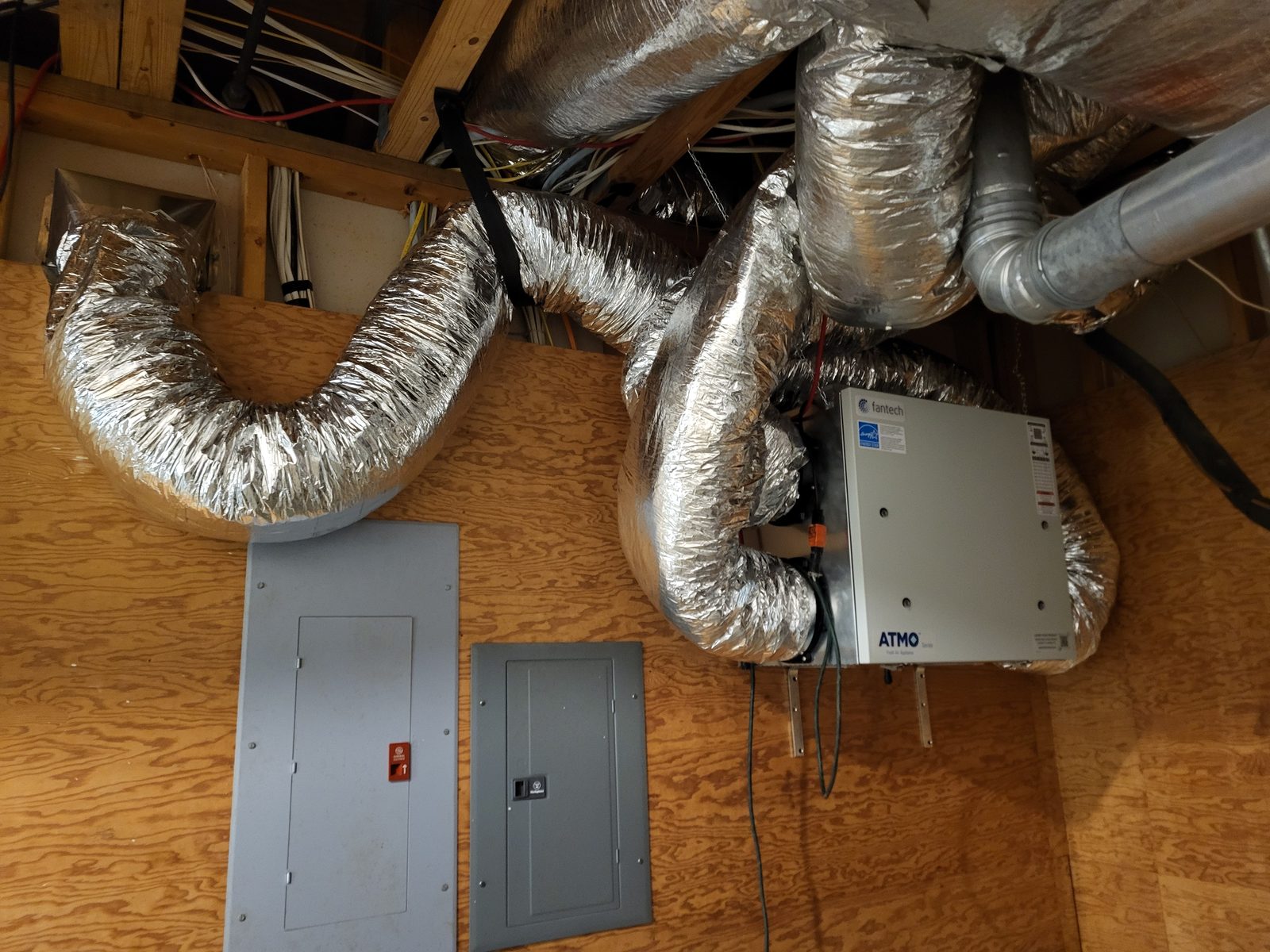
An ERV is a ducted unit that pushes stale indoor air out and pulls fresh outdoor air in through a core that transfers most of the heat and humidity from one stream to the other. In summer the incoming air is pre-cooled and pre-dried by the air leaving; in winter it's pre-warmed. You get continuous fresh air at a fraction of the energy cost of ventilating without one.
Russell sizes and installs ERVs as a standalone service, and as a companion to radon work in homes where ventilation is part of the answer. His degree is in environmental engineering with a minor in atmospheric science, which is exactly the background this kind of air-handling design calls for.
Crawl space membranes and sub-membrane depressurization
For homes built over a crawl space instead of a slab or a basement.
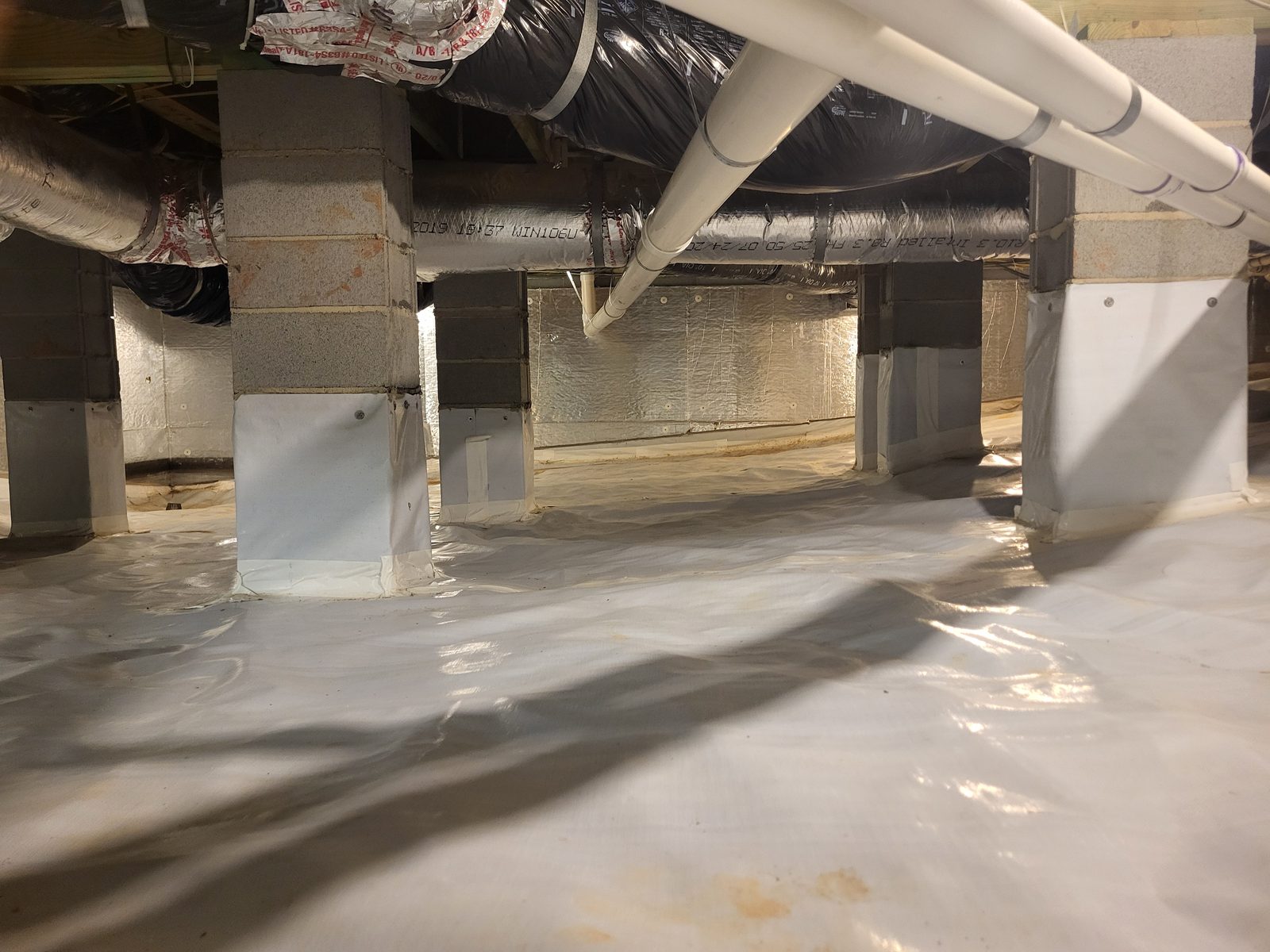
A crawl space has no concrete floor to seal, so radon comes straight up out of the dirt under the house. The fix is to cover the ground with a new membrane, also called a vapor barrier, and seal it so the soil gas stays underneath instead of drifting up into the rooms above.
With sub-membrane depressurization, Russell runs piping under the new membrane and connects it to a fan that pulls the soil gas out from beneath the plastic and releases it above the roofline. It works the same way a sub-slab system does in a basement home, with the membrane doing the job of the slab.
Replacing an old vapor barrier
A lot of crawl spaces already have a thin sheet of plastic on the ground that is torn, loose, or was never sealed, and it stops very little. We pull out what isn't working and install a new membrane across the crawl space floor. Covering the dirt also cuts down the ground moisture crawl spaces are known for.
Crawl space systems carry the same guarantee as every system we install: below 3.0 pCi/L on the post-mitigation test.
Fan replacement and system service
For homes that already have a system, whoever installed it.
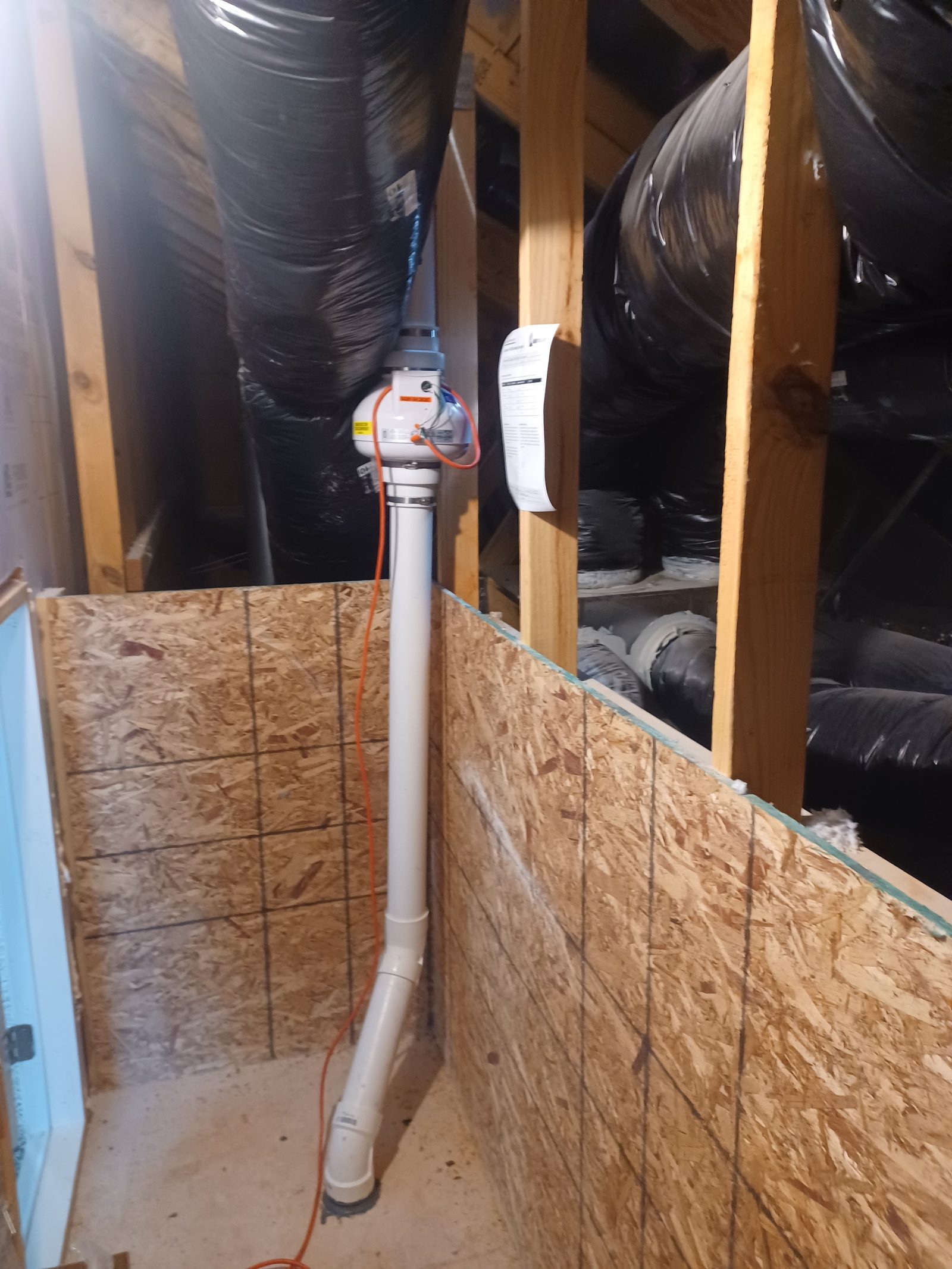
Radon fans run around the clock and eventually wear out. The signs are a fan that has gotten loud, a manometer whose fluid sits level instead of offset, or a fan that has simply stopped. Sometimes the fan is fine and the problem is a cracked pipe joint, a failed seal, or a system that was undersized from the start.
We diagnose what is actually wrong, replace the fan or repair the system, and re-test so you know the house is back under the guaranteed number rather than assuming it is.
Sump pump cover sealing
A small job that closes one of the biggest openings in the house.
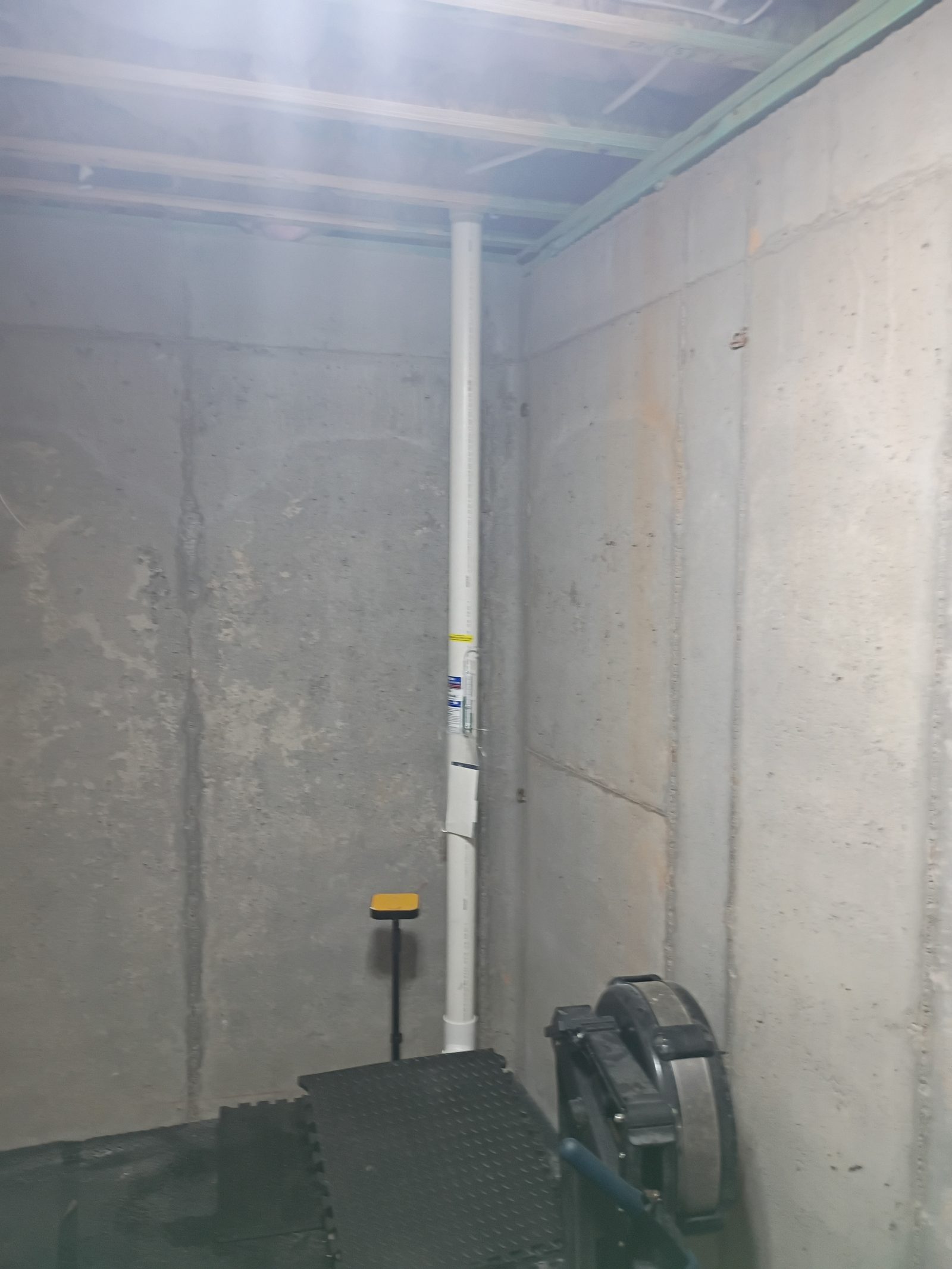
A sump pit is a hole straight down into the soil under your foundation. Left open, it's one of the most direct paths for radon and moisture to enter the basement. We fit a sealed, gasketed cover with ports for the discharge line and the power cord, so the pit is closed to soil gas and the pump can still be serviced without cutting anything.
Sump sealing is often part of a full mitigation system. It's also available on its own for homes where the pit is the main entry point, or where a system already exists and the pit was never sealed.
Call and describe the house.
Russell will tell you what makes sense and what doesn't. Estimates are free.